Endoscopic MIS-TLIF (Minimally Invasive Transforaminal Lumbar Interbody Fusion) is an advanced surgical solution for patients with spinal instability or severe degenerative conditions. This technique stabilizes the spine while minimizing surgical trauma through the use of tubular retractors and endoscopic visualization.
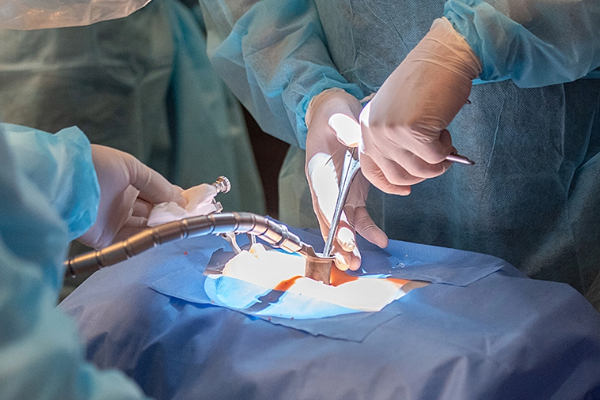
It combines the benefits of spinal fusion with the advantages of minimally invasive surgery, making it an effective option for carefully selected patients.
This procedure is recommended for conditions such as:
A unilateral approach is used, meaning access is gained from one side of the spine. Tubular retractors gently separate muscles rather than cutting them. The endoscope provides magnified visualization of the surgical area.
The damaged disc is removed, nerves are decompressed, and an interbody cage filled with bone graft is placed between the vertebrae to promote fusion. Percutaneous pedicle screws may be inserted to provide additional stability during healing.
Patients are encouraged to mobilize early under medical supervision. Hospital stay is shorter compared to open fusion surgery. Over time, the fused vertebrae provide strong, lasting stability, reducing pain and improving functional ability and quality of life.
Advanced endoscopic and minimally invasive spine techniques reflect a commitment to providing precise, safe, and effective treatment. By combining modern technology with surgical expertise, patients receive comprehensive care focused on long-term relief, faster recovery, and improved quality of life.